Capacity lower, drain ordinary
Repeat the capacity reading across several charge cycles. Compare runtime, unexpected shutdowns, heat, and any official device diagnostic before discussing repair.
Use reported capacity to compare the phone's current estimate with its design reference. Use a timed percentage test to measure drain under recorded conditions. The calculator keeps those results separate because capacity loss and daily consumption are not the same problem.
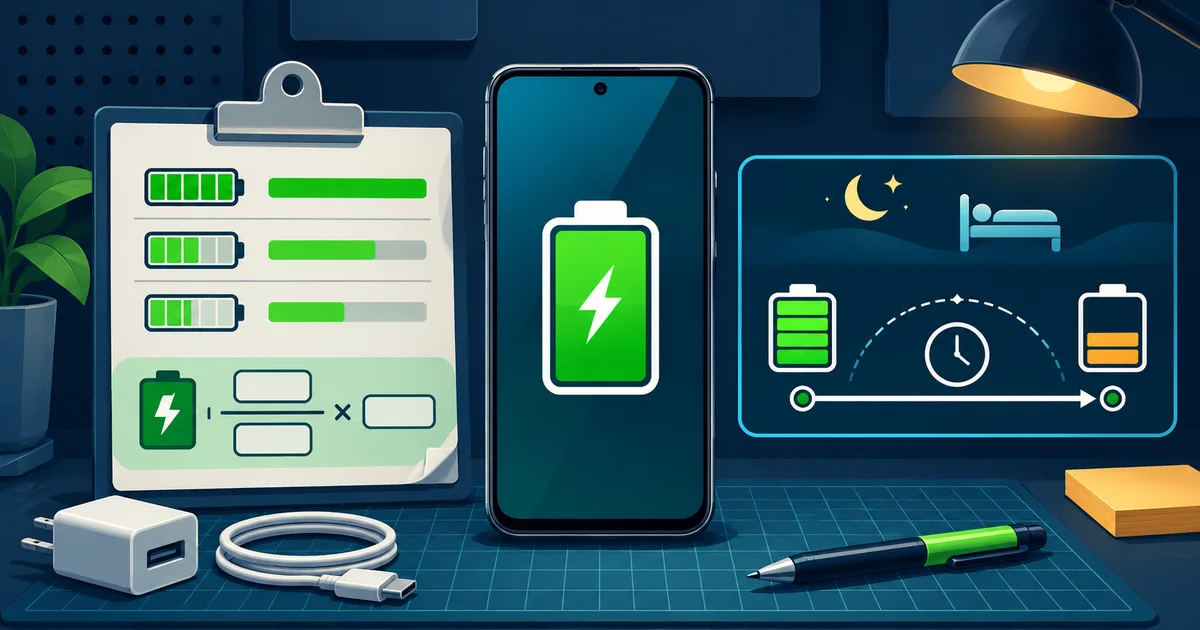
The useful result is not a pass or fail badge. It is a recorded comparison that tells you which evidence to collect next.
Repeat the capacity reading across several charge cycles. Compare runtime, unexpected shutdowns, heat, and any official device diagnostic before discussing repair.
Investigate workload, weak signal, screen time, radios, sync, and background apps during the same interval. Capacity and consumption can point in different directions.
Improve the test before interpreting it. Use the same duration, signal environment, screen state, radios, temperature, and starting range.
full-charge capacity ÷ design capacity × 100Software-reported capacity can be rounded, estimated, learned over time, or unavailable. The ratio is not a laboratory measurement.
(start percentage - end percentage) ÷ hoursBattery percentage is rounded. A rate from one test should be compared only with another test under similar conditions.
For symptoms outside these two measurements, choose a controlled test from the Android battery and performance guide library.
Check battery condition with several signals.
Check Android battery healthRun a repeatable overnight comparison.
Measure overnight Android battery drainTest background activity without breaking sync.
Investigate Android background battery useCool the phone and isolate the trigger.
Diagnose Android phone overheating