Approve a distinct task
The page must solve a question that another page does not already answer. A model name or keyword change is not a new task.
Every public page must solve a real Android problem with traceable reasoning, honest limits, and accurate source attribution.
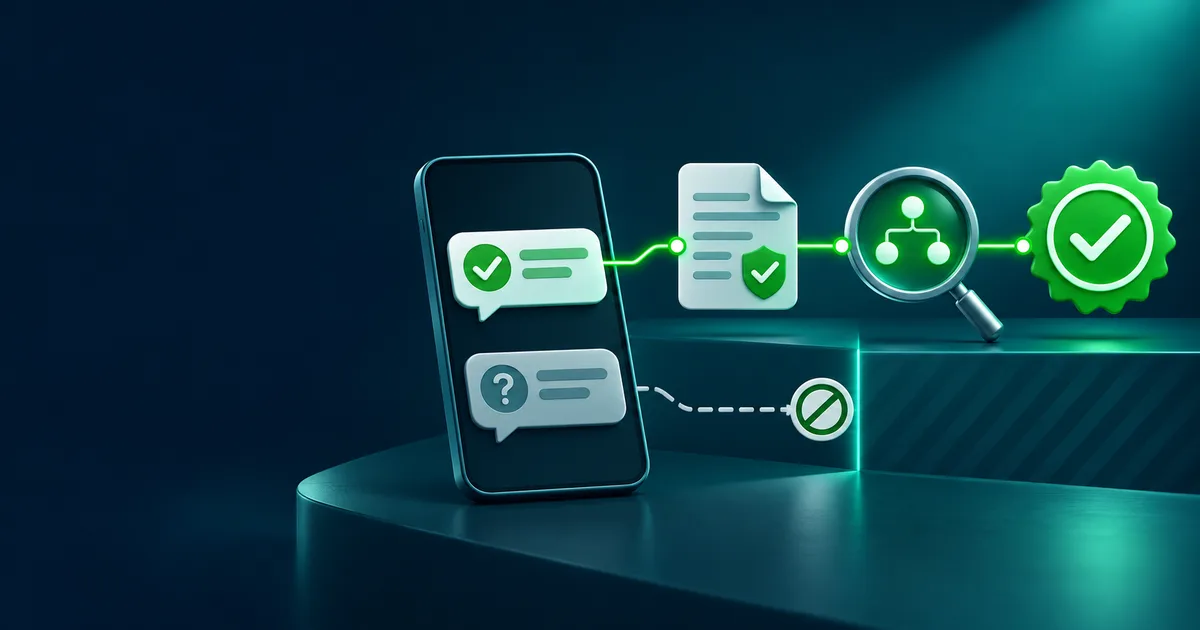
A page is approved only when it owns a distinct reader task. Its title, H1, direct answer, and main sections must describe the same problem or decision. We do not create another URL simply because a keyword, manufacturer, or model name can be substituted into existing copy.
Platform behavior, account recovery, security controls, update layers, and destructive actions are checked against primary sources such as official Android, Google account, app developer, carrier, government, or device-manufacturer documentation. A manufacturer-specific path is not presented as universal Android behavior.
Secondary sources may help identify a question, but they do not replace the official source for a setting, support commitment, safety instruction, or account process. Every permanent guide includes at least two distinct primary references and explains what each one supports. Source count is not a substitute for judgment: a reference must be relevant to the specific claim or escalation boundary.
A guide needs a useful answer near the top, ordered checks, comparisons that isolate the failing layer, edge cases, and a clear next action. The public Android guide library also uses worked scenarios, decision frameworks, data-loss warnings, physical-safety stop conditions, or interactive tools where relevant. Generic introductions and repeated conclusions do not count as depth.
Every page must contribute a task-specific method, comparison, calculation, field note, scenario, decision table, original visual, or working tool. Word count alone is never treated as proof of quality. A page is held back when its useful material could be replaced by the same paragraphs from another URL.
The page title and H1 must describe the same primary task. The H1 may add useful scope, such as the evidence compared or the outcome produced, but it cannot introduce a different subject. Each page keeps one visible H1.
Link text names the destination or the action available there. A card summary, category label, and destination title are not wrapped into one oversized anchor. Card links stay on a concise descriptive title or action so readers, assistive technology, and search engines receive the same clear expectation.
We do not fabricate hands-on tests, personal ownership, repair outcomes, surveys, interviews, benchmarks, credentials, star ratings, or customer stories. An example is labeled as a scenario and its assumptions are visible. A calculation is described as an estimate unless its inputs and method justify a stronger statement.
Shared templates provide consistent navigation, answer placement, sources, and safety controls. The substance must still change with the reader task. Topic hubs contain their own workflow, comparisons, and checklist. Guide pages contain route-specific evidence, actions, mistakes, and sources. Pages that differ only by a replaced word are rejected.
The Docs Library importer verifies the site identity, exact folder, required fields, featured image, and duplicate slug. It removes unsafe markup and extra H1 elements. Supplied outbound links are qualified before the article enters the review queue.
Scheduling does not equal publication. Approval checks Android topical fit, answer-first usefulness, practical examples or comparisons, explicit limits, at least two distinct non-generic sources, heading order, title alignment, unsupported first-person experience claims, and substantial similarity. The comparison covers queued articles and the permanent guide library. The same gate runs again when an article becomes due, so a status or date change cannot bypass it.
We do not publish keyword or model-name permutations, scraped articles, synonymized articles, hidden search text, or crawler-only copy. We also reject paid links that pass ranking credit, automated Google Search queries, self-service guest posts, and unrelated content intended to borrow the domain's history.
Browser navigation remains under the reader's control. The site does not trap the back button or redirect by crawler, referrer, or device.
Imported and programmatic content must meet the same standards as the permanent guide library. Those standards cover visible authorship, design, editorial responsibility, sourcing, corrections, and practical value. A thin, duplicated, out-of-scope, unsupported, or primarily commercial page remains non-public even when it is already scheduled.
Sponsored, affiliate, supplied, or commercially influenced content would require clear disclosure and independently useful editorial work. Its links would use appropriate rel="sponsored" or rel="nofollow" qualification. Commercial content cannot enter through the automated import path or receive a weaker review. No such relationship changes the safety, evidence, or publication requirements. Current launch guides do not contain sponsored recommendations.
The reviewed date marks a substantive check, not an automatic timestamp change. A correction that changes the reader's action, safety, data risk, or buying decision is prioritized and documented internally. Readers can submit a correction with its source. A page is consolidated, redirected, noindexed, or removed when it no longer provides a distinct accurate answer.